Darknet Markets 2026:
The dark web is part of the deep web but is built on darknets: overlay networks that sit on the internet but which can't be accessed without special tools or software like Tor. Tor is an anonymizing software tool that stands for The Onion Router — you can use the Tor network via Tor Browser.
| Darknet Market | Established | Total Listings | Link |
|---|---|---|---|
| TorZon Market | 2022 | 140+ | Onion Link |
| Nexus Market | 2024 | 600+ | Onion Link |
| Abacus Market | 2022 | 100+ | Onion Link |
| Ares | 2026 | 100+ | Onion Link |
| Cocorico | 2023 | 110+ | Onion Link |
Updated 2026-10-27
Safe and Easy Shopping on the Darknet
The evolution of darknet markets by 2025 has directly addressed historical friction points, merging robust security with an intuitive user experience. This synthesis transforms the procurement process into one that is both secure and straightforward, primarily through two interconnected advancements: trusted community review systems and streamlined private cryptocurrency payments.
Product quality and vendor reliability are no longer matters of guesswork. Modern platforms implement standardized, granular review systems where past transactions are a prerequisite for posting feedback. This creates a self-reinforcing cycle of accountability. A buyer can assess a product based on:
- Verified purchase reviews detailing potency and purity
- Vendor performance metrics like shipping consistency and stealth
- Community-driven ratings that filter out unreliable actors
Concurrently, the payment process has been simplified and secured. Markets now natively integrate privacy-focused cryptocurrencies with built-in mixing or confidential transaction protocols. This means a user can make a payment directly from their wallet to the platform's escrow without intermediate, complex steps. The transaction is inherently private, reducing blockchain analysis risks, and its simplicity minimizes user error. The integration of these automated multi-signature escrow systems holds funds securely until delivery confirmation, releasing them automatically upon satisfaction, which is often informed by the very review system it supports.
The result is a cohesive environment where security measures are seamlessly woven into the user journey. The anxiety associated with unknown vendors and traceable payments is mitigated by transparent, community-vetted data and financial tools designed for discretion. This design philosophy ensures that operational security and transactional ease are not competing priorities but are fundamentally aligned, making the entire process more accessible and predictable for the conscientious buyer.
More Secure and Reliable Darknet Markets
The evolution of darknet markets toward decentralized hosting fundamentally alters the risk profile for both vendors and buyers. Unlike the traditional model reliant on a single server or a known set of servers, the 2025 infrastructure distributes marketplace data across a peer-to-peer network or a series of autonomous nodes. This architectural shift means there is no central point of failure for law enforcement to target, dramatically increasing platform longevity and operational security.
For the user, this translates to a more reliable shopping environment. The constant threat of a sudden exit scam or a coordinated takedown, which historically led to loss of funds and data, is significantly mitigated. Transactions and escrow services are managed through automated smart contracts on supporting blockchains, not by a central admin who could abscond with the coins. The marketplace interface itself becomes resilient; if one node goes offline, the network routes around it, ensuring continuous access.
The practical benefits are clear:
- Market admins have far less direct control over user funds, reducing malicious insider threats.
- There is no single database to seize, protecting user identities and transaction histories.
- Platforms can update and evolve through distributed consensus mechanisms, making them adaptable to new security threats without top-down intervention.
How Automated Multi-Signature Escrow Makes Darknet Transactions Safer
The evolution of escrow from a simple third-party hold to an automated multi-signature (multisig) system represents a fundamental improvement in transactional security on darknet markets. Traditional escrow relied on a single market administrator holding funds, which created a central point of failure and risk. In contrast, a multisig escrow uses a smart contract that requires multiple cryptographic signatures to release payment, typically from the buyer, the vendor, and sometimes a third arbitrator.
This process automates trust. When a buyer initiates a purchase, the cryptocurrency is sent to a unique, multi-signature address controlled by the smart contract. The funds are locked there until predefined conditions are met. Upon successful delivery, the buyer and vendor provide their signatures to release the payment to the vendor. If a dispute arises, a trusted third party can be brought in to review the evidence and cast the deciding signature, directing funds to the appropriate party. This structure effectively eliminates the risk of an exit scam by market administrators, as they never have sole control over the escrow funds.
The practical benefits for users are direct and significant:
- Vendors receive faster payments upon confirmed delivery, improving their cash flow.
- Buyers are protected against losing funds to unscrupulous vendors or platform failures.
- The entire dispute resolution process becomes more transparent and less prone to bias, as all communication and evidence are recorded on the platform and the arbitrator's role is clearly defined by the contract's code.
This automated, decentralized approach to escrow transforms the transaction from a leap of faith into a technologically enforced agreement, making darknet commerce more predictable and secure for all conscientious participants.

How Darknet Reputation Systems Make Buying Drugs Safer
Vendor reputation systems on darknet markets in 2025 have evolved beyond simple five-star ratings. They now function as multi-dimensional trust frameworks, aggregating data from every transaction to provide a comprehensive profile. Each vendor's page displays separate, verifiable metrics for product purity, shipping speed, communication, and stealth packaging. This granularity allows buyers to make informed decisions based on specific priorities, whether they value discretion above all else or require a specific chemical consistency.
The trustworthiness of these systems is enforced through cryptographically-secured feedback. Reviews can only be left by wallets that successfully completed a transaction, eliminating fake ratings. Furthermore, long-term vendor statistics are stored in a decentralized manner, making them resistant to manipulation by either the platform or the vendor themselves. This creates a self-regulating ecosystem where high-quality, reliable vendors are consistently rewarded with more business, while unreliable actors are quickly identified and avoided by the community.
This evolution directly supports secure and simple shopping. A buyer can efficiently filter for vendors with a 98 purity rating across 500 transactions and a 99 on-time delivery score. The integration with private cryptocurrency payments completes the loop, as the escrow system automatically releases funds only after the buyer confirms satisfaction, which is then immutably recorded in the vendor's reputation. The result is a streamlined procurement process where risk is minimized through transparent, data-driven peer assessment.
Private Coins Make Darknet Drug Trade Easy and Secure
The evolution of darknet commerce in 2025 is fundamentally linked to the maturation of privacy-centric cryptocurrencies. These digital currencies now integrate built-in mixing or confidential transaction protocols as a standard feature, moving beyond the optional, third-party tumblers of the past. This integration directly addresses the primary financial vulnerability of users: blockchain analysis. When a cryptocurrency like Monero or Zcash has privacy engineered into its core protocol, every transaction is obfuscated by default. This creates a seamless financial layer where the origin, destination, and amount of each payment are cryptographically shielded.
The operational benefit for the buyer is profound. The process of acquiring goods is streamlined into a simple, secure action. A user selects a product, receives a payment address, and sends the funds. The integrated privacy mechanism operates automatically in the background, eliminating the need for separate, complex steps to launder coins. This reduces user error and establishes a reliable financial environment. The certainty that one's transaction history cannot be linked to a darknet purchase or to their public cryptocurrency holdings fosters greater confidence in the marketplace ecosystem. This technical assurance is a prerequisite for the growth of these platforms, as it lowers the perceived financial risk for a broader audience.
Furthermore, the standardization of these currencies across major darknets in 2025 creates a unified economic zone. Vendors and buyers are no longer forced to navigate a fragmented landscape of supported coins, which often involved risky conversions. The widespread adoption of a few, robust privacy coins means:
- Reduced transaction fees from avoiding intermediary exchanges.
- Faster settlement times as vendors readily accept the currency.
- A stronger, more stable pricing model for goods, as value is not lost to volatility during currency swaps.
This financial infrastructure, working in tandem with escrow and reputation systems, completes a secure transactional loop. The buyer's identity is protected by the cryptocurrency's protocol, their funds are secured by automated multi-signature escrow, and their purchase decision is informed by verified community feedback. Each component reinforces the others, creating a system where commerce can proceed with a degree of efficiency and security previously unattainable.
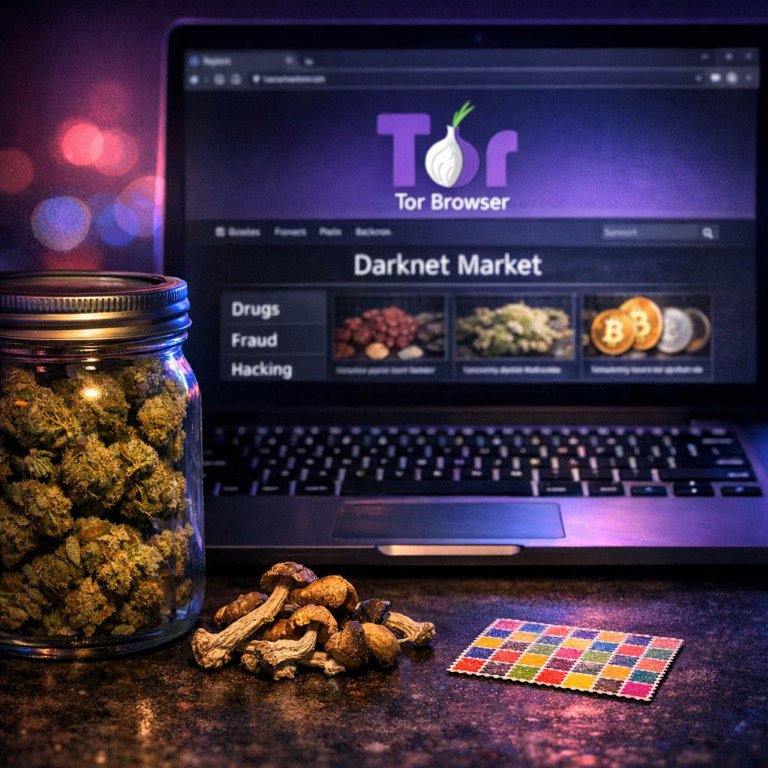
How Darknet Reviews Ensure Good Product Quality
The evolution of darknet markets in 2025 has fundamentally addressed the historical challenge of product uncertainty through the implementation of standardized community review systems. These systems function as a decentralized quality assurance mechanism, where every transaction concludes with a structured, multi-criteria feedback form. This form requires buyers to rate specific attributes such as product purity, shipping stealth, and vendor communication on a consistent numerical scale. The aggregation of this data generates a granular and statistically significant reputation profile for each product listing, moving beyond simple vendor-level feedback.
The technical infrastructure ensures the integrity of this data. Reviews are cryptographically signed and permanently linked to a verified purchase, making fraudulent feedback generation economically and technically impractical. This creates a transparent ecosystem where product quality is not merely advertised but is empirically demonstrated through crowd-verified data. For the buyer, this translates to a simplified and secure shopping experience; decision-making is based on comparable, historical performance metrics rather than on potentially misleading vendor descriptions.
This review standardization, when combined with the privacy provided by advanced cryptocurrency protocols, establishes a complete and self-reinforcing trust framework. The buyer can engage in transactions with a high degree of confidence in the product's quality, as the collective experience of previous customers is systematically quantified and made accessible. The result is a market environment that efficiently filters out low-quality listings and promotes vendors who consistently deliver as advertised, thereby reducing transactional risk and enhancing overall user satisfaction.
How Darknet Markets Stay Reliable and Fair
The operational resilience of darknet markets in 2025 is fundamentally tied to their adaptive infrastructure. Platforms no longer rely on single servers or centralized hosting, which were historical points of failure. Instead, they utilize decentralized node networks and peer-to-peer protocols that distribute the platform's core functions. If one node is compromised or taken offline, the network automatically reroutes traffic and data through other available nodes, maintaining uninterrupted service. This architecture makes the platform highly resistant to external attacks and downtime, ensuring consistent access for users.
This technical shift enables a new model of distributed platform governance. Decision-making power, such as implementing fee changes or updating security protocols, is not held by a single administrator. Control is distributed among stakeholders, often through token-based systems or consensus mechanisms among trusted vendors. Key governance actions, like releasing funds from escrow in a dispute, can require multi-signature approval from randomly selected, reputable community members. This removes the risk of a corrupt or capricious admin exit-scamming and aligns platform policies with the collective interest of its user base.
The combination of these systems creates a self-regulating and stable environment. The infrastructure adapts to threats, while the governance model adapts to the community's needs. For the consumer, this translates to a marketplace that is:
- More reliable, with near-constant uptime.
- More trustworthy, as rules are enforced by transparent code and community consensus, not a single entity.
- Simpler to use with confidence, as the underlying complexity of security and fairness is handled automatically by the system's design.
This evolution marks a maturation where the platform itself becomes a neutral, robust utility, directly supporting the secure and straightforward shopping experience defined by trusted reviews and private payments.